What proof of work to require before a job closes
A job marked done proves nothing once a defect appears. Which evidence to ask for, who should accept it, and how the platform refuses to close without it.
An installation is declared done. The team moves to the next task and the invoice gets paid. Three months later a defect appears, and the client wants to know what was delivered, who carried out the work and who accepted it. The company goes looking through messages and phone galleries, and what it finds depends on who still works there and what they remember.
“Done” is a statement, and a statement leaves nothing to check
On most sites, the end of a job is announced by the person who did it. That person is usually honest and often right. But a word in a site meeting gives you nothing to show a client in a dispute, and nothing to look at when the same defect turns up elsewhere.
It also leaves good crews exposed. A team that did careful work has no way of showing it when the problem turns out to come from somewhere else. Without a record, the dispute is settled from memory, and the argument usually goes to whoever speaks with the most confidence.
What evidence to ask for
The right proof depends on the work. An inspection does not produce what an installation produces. The usual forms are these:
- Before and after photos
- Technical reports
- Delivery notes
- Installation certificates
- Quality reports
- Signed acceptance documents
Before you settle on what each type of job requires, one test helps: would this still make sense, a year from now, to someone who was never on that site? A photo with no project and no date attached to it fails that test. So does a report nobody can find.
Someone else has to accept the work
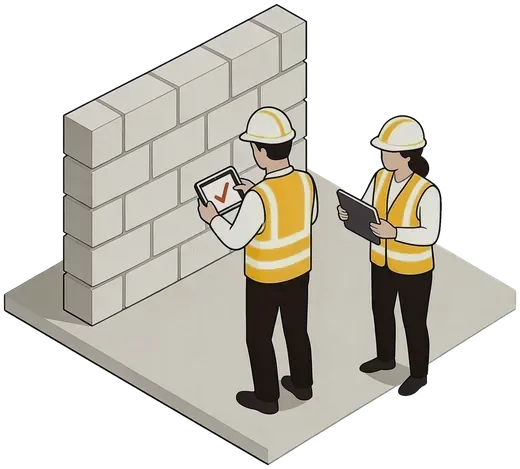
Evidence supplied and accepted by the same person does not carry much weight, however honest that person is. Acceptance has to come from someone other than the person responsible for the work, and the record should show who that was and exactly when it happened. Otherwise the file holds pictures and no decision.
How FlexiStrux handles the end of a job
In FlexiStrux, an installation, service, repair or inspection has its own execution record. It holds the project, the task, the responsible employee, the originating need, the procurement request and the purchase order, along with planned and actual dates. A defect found later can be followed back through that chain to the order and to the person who asked for it.
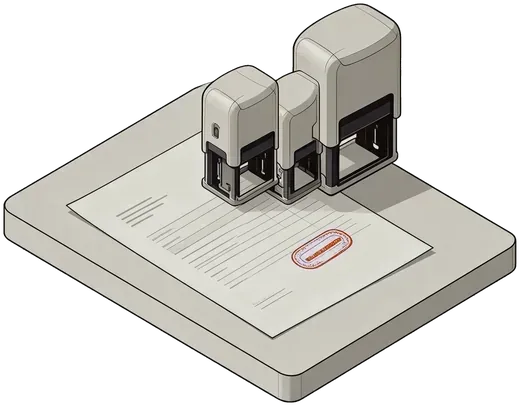
Two rules are built in. Where validation is required, the record cannot be validated until at least one piece of evidence is attached. And the employee responsible for the work cannot validate their own execution. Only an administrator or the construction director can override that, and the override is itself recorded. The validator’s name and the time of validation are stamped automatically, never typed by hand.
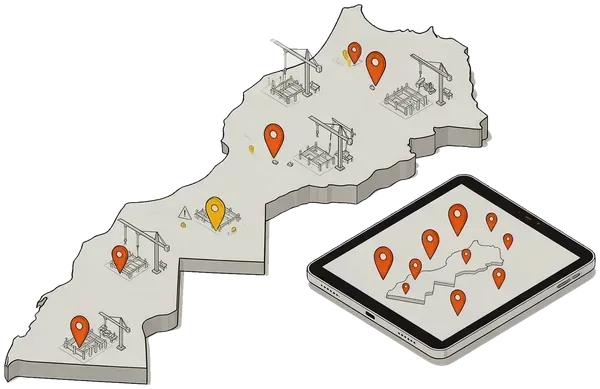
The record moves through plain stages: planned, in progress, completed, waiting validation, then validated or rework required. The validating supervisor is alerted when work is waiting, and the project manager when it has been validated. The work execution status report shows what sits at each stage, across projects.
Evidence goes into its own library, attached to the record it belongs to, so you reach it from the project and do not have to hunt through a shared drive. Site teams attach photos from a browser on a tablet. A dedicated mobile app for capturing evidence in the field is on the roadmap and not available today.