What is on which site? Keeping stock by project
One company pile cannot say what stands on a site or what it cost. How project and site warehouses and recorded issues answer a director's question.
The director phones the site: is there enough rebar for next week? The site says to ask the warehouse. The warehouse says the system shows plenty, but that figure covers the whole company, and some of it may have left without paperwork. Eventually someone walks over and counts. Nobody has even started on the next question, which is what that material has cost the project so far.
One company pile hides more than it stores
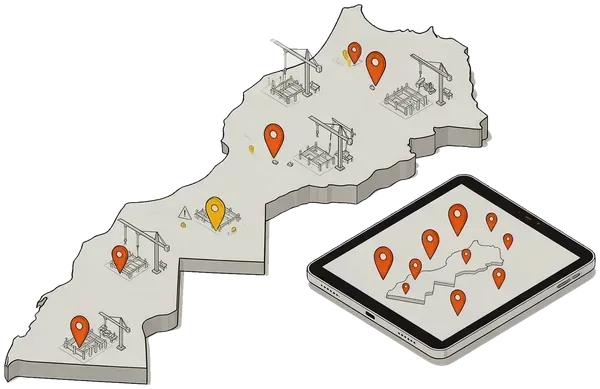
A single stock figure can be correct for the company and useless for a site. It says nothing about where the material is standing. It lets material move between sites without anyone noticing, and when that happens the costs stay with the wrong project. One site can run short of what is sitting idle on another, and nobody sees it until the work stops.
For a company running several sites at once, the warehouse question and the cost question are the same question. If you do not know which project a pallet belongs to, you cannot know what the project has consumed.
Delivered is not the same as installed
Material arriving in a warehouse is not material on a wall. Between the delivery truck and the installation there are separate events, each with a different person responsible: something is received, stored, requested, issued and taken by the site. Companies usually record the first of these and find out about the last from the invoice or from the wall itself. Shortages and disputes tend to come from the part in between.
Stock organised per project and per site
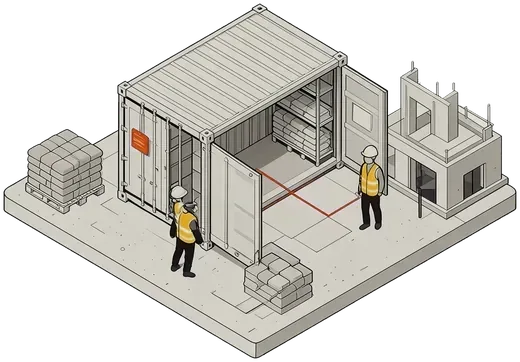
FlexiStrux organises stock in three levels: a main warehouse, a project warehouse for each project, and site warehouses where material sits at the point of use.
Reception records what actually turned up against what was ordered, linked to the project, the supplier, the procurement request and the receiving warehouse. It handles batch or serial tracking, with an optional quality inspection where the material demands it. A quality status travels with the receipt, so a conditional acceptance stays visible and does not rely on someone remembering it. The stock is then booked to the project or site warehouse.
Every issue to site says who did what
The site draws material through an internal request. The project team asks, the warehouse confirms availability and issues, and the site receives. The record holds:
- Who requested the material, who approved the issue, who physically issued it and who received it on site
- Which project and warehouse, and which installation or task it was for
- The quantities requested, delivered and remaining
- The internal request reference, carried on the stock movement
One rule is enforced here: material cannot be issued to a project unless it exists in the warehouse or the delivery has been explicitly approved as a direct delivery to site.
The warehouse dashboard shows goods received, pending internal requests, stock by project, items awaiting quality inspection, material issued today and site warehouse balances. Warehouse managers control receipt and issue, while warehouse users carry out the operations.
Back to the phone call. The director no longer has to send anyone to count, because the system can say what is standing on that site right now and what it cost.