Already have an ERP? Replace it or run sites beside it
Your accounting works, but your ERP never sees the site. The two routes with FlexiStrux: replace your system, or run construction while it keeps accounts.
The finance director has heard this before. The accounting took time to settle, closing works, the auditors know the system. Then operations ask for something to control site purchases, someone suggests changing the ERP, and the meeting ends there. Meanwhile the sites carry on running on phone calls and spreadsheets, because the argument about accounting has blocked the argument about the sites.
What your current ERP sees, and what it does not
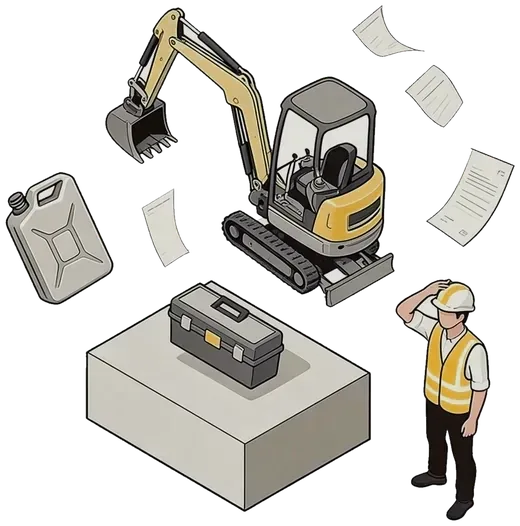
A construction company has two problems at once. One is running a company: accounting, suppliers, stock, invoicing, reporting to the bank. The other is running sites: who asked for the cement, who approved it, which supplier won and why, what was delivered, who installed it, and what it finally cost the project.
Generic ERPs handle the first and stop at the accounts. An invoice reaches the system, but the request, the approval, the award, the delivery, the execution and the proof on site all took place somewhere else. So the system can be working exactly as intended while the director still has no idea who authorised a purchase.
Two routes, and you do not have to choose on day one
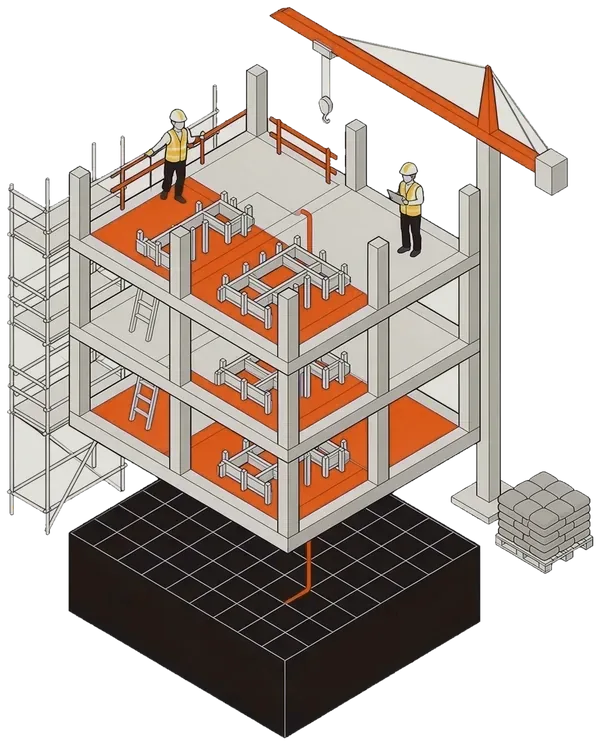
FlexiStrux is a complete ERP for construction and BTP companies: the FlexiERP core, which runs the company, plus the features the construction site needs. That composition gives you two options.
You can run your construction operations in FlexiStrux while your current system keeps group accounting. Site needs, supplier scoring, orders, site warehouses, execution and proof then live in FlexiStrux, and your accounting stays where it is.
Or you can replace the current system. The FlexiERP core covers finance and accounting in dirhams, purchasing, stock and warehouses, suppliers and customers, assets and vehicles, people, projects and tasks, and governance. Everything then sits in one platform, one database and one login, and the cement a foreman asked for on Monday is the same line your accountant reconciles at the end of the month.
How to think about the choice
Nobody outside your company can settle this for you, but a few situations point one way or the other. Keeping your current system usually makes sense when group accounting is shared with other entities, or when changing it now would compete with everything else on the finance team’s plate. Replacing it starts to look better when the current system is due for a change anyway, or when you would rather not keep two systems side by side for long.
If you keep both, ask early how they will talk to each other. Accounting and tax integration and third-party integrations are among the evolutions that can be scoped with you, and the answer depends on the system you have today.
Start with one real site
Either route can start small: a pilot on one of your real sites, then an extension from there. Deployment covers installation, the configuration of the 15 access profiles and the approval circuits, migration from spreadsheets or an existing system, and team training.
The licence is permanent and covers the company, with all business modules included and no per-user subscription on top. So the enterprise core is already in the product on the day you decide to consolidate, if you ever do. You keep control of the scope and the pace.